The Inspector Doesn't Need to Be a Better Architect
Imagine a newly completed high-rise. The architects who designed it are brilliant — years of training, intimate knowledge of every beam, joint, and load calculation. Now a structural inspector walks in. Is the inspector a better architect than the people who designed the building? Almost certainly not. Does that make the inspection pointless? Quite the opposite.
The inspector brings something the architects cannot bring to their own creation: an outsider's eye, a professional obsession with failure rather than function, and the memory of a hundred other buildings and exactly where each one cracked. The architects know how the building is supposed to stand. The inspector knows all the ways buildings fall.
AI red teaming works the same way.
Builders and Breakers Are Different Disciplines
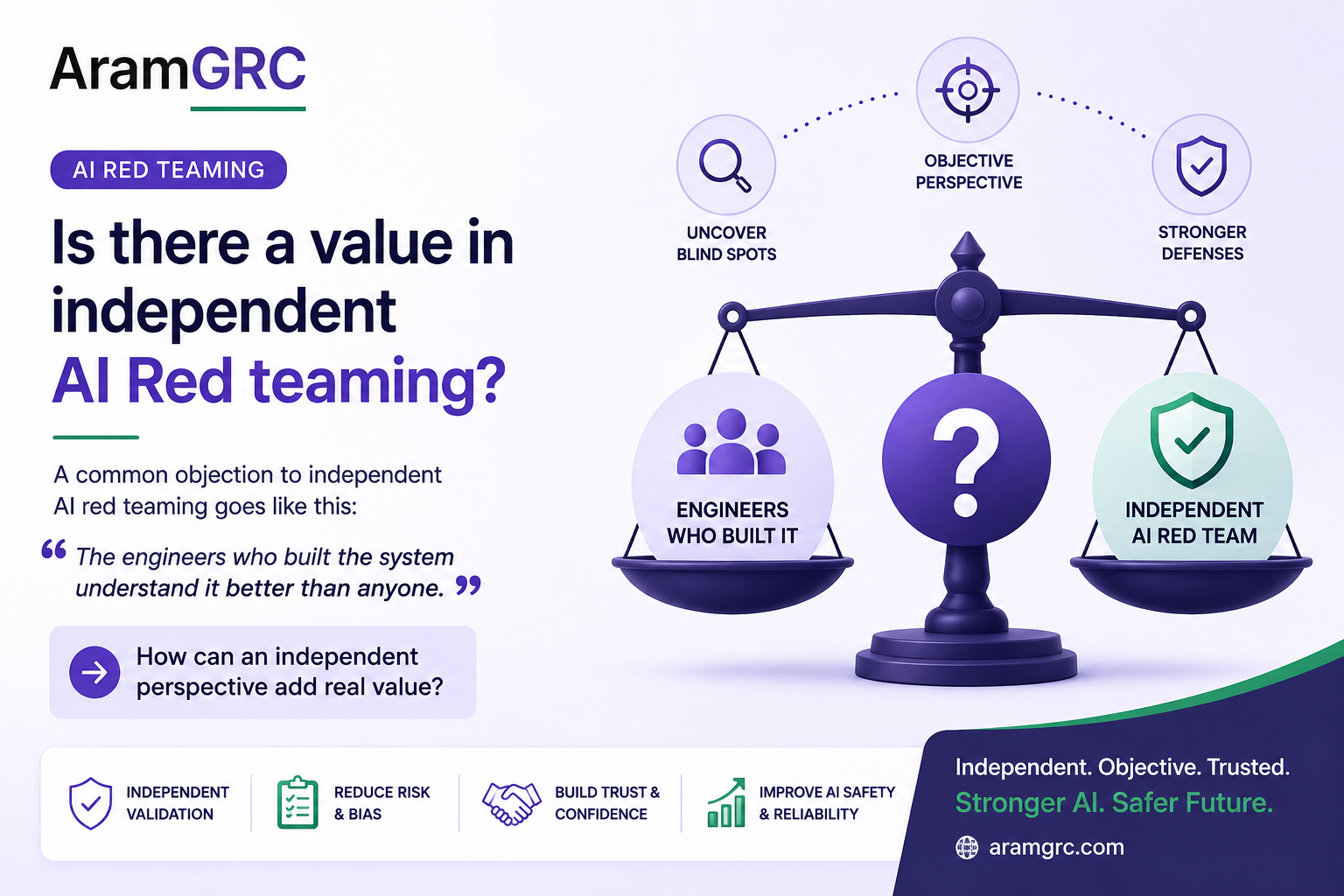
A common objection to independent AI red teaming goes like this: "The engineers who built the system understand it better than anyone. How can an outside team find what they missed?" The question assumes that building and breaking sit on the same skill ladder, and that the breaker must stand on a higher rung. They don't, and they needn't.
Engineering an AI system is an act of construction — architecture, data, training, guardrails, deployment. Red teaming is an act of adversarial imagination. It asks a fundamentally different question: not "does this work as intended?" but "how can this be made to do what was never intended?" That means probing for manipulated outputs, leaked data, bypassed safeguards, biased behavior, and dangerous edge cases that never appear in a normal test plan.
These are different mental postures, and history shows they rarely coexist in the same team. The people who design defenses develop blind spots precisely because they designed them. Every assumption baked into the system becomes invisible to its makers. An external adversary — whether malicious or hired — carries none of those assumptions.
What Independent Red Teamers Actually Bring
- An adversarial mindset, professionally sharpened. Attackers don't follow the product roadmap. A dedicated red team spends all its time thinking like the adversary — creatively, laterally, persistently — which is a craft in its own right, distinct from machine learning engineering.
- Breadth across many systems. An in-house engineer knows one system deeply. An independent agency sees failure patterns across many models, applications, and industries. Vulnerabilities are rarely unique; they recur in families. Pattern recognition across engagements is something no single builder can replicate.
- Fluency in governance and regulation. AI red teaming is no longer optional in much of the world. Regulatory frameworks and government mandates increasingly require adversarial testing of AI systems before and after deployment. Translating technical findings into risk language that boards, auditors, and regulators understand is half the value of the exercise — and it is a competence engineering teams are not built for.
- Independence itself. This is the structural advantage that no amount of in-house talent can substitute. The team that built a system has every incentive — psychological, organizational, commercial — to conclude that it is safe. An independent assessor has none. Builders grading their own homework is precisely the problem external red teaming exists to solve.
The Credibility Floor Still Matters
None of this means technical competence is optional. There is a floor, and it is high. A red teaming agency must understand how modern AI systems work well enough to design meaningful attacks, reproduce its findings rigorously, and defend its conclusions in a room full of the client's engineers. If findings can be dismissed as naive, the engagement fails.
But the bar is not "smarter than the builders." The bar is unimpeachable competence at the adversarial and evaluative craft, plus enough fluency in the building side to be taken seriously. The inspector need not out-design the architect. The inspector must simply know, with certainty and evidence, where buildings fail.
The Wrap-Up: Trust, but Verify Independently
As AI systems move into decisions that touch money, health, safety, and reputation, the question is no longer whether they should be adversarially tested — regulators, customers, and common sense have already answered that. The real question is who should do the testing. And the answer cannot be only the people who built the system, however talented they are. Assurance requires distance.
That is exactly the role AramGRC plays. As an independent AI red teaming and governance partner, AramGRC brings the adversarial craft, the cross-industry pattern knowledge, and the regulatory fluency to stress-test your AI systems before someone with worse intentions does it for you — and to turn what we find into clear, board-ready risk insight.
If your organization is deploying AI and hasn't yet had it independently tested, now is the time. Reach out to AramGRC for an independent AI red teaming engagement — and find your cracks before the world does.